Human Wisdom for the Age of AI
Thoughts from Modern Scholars
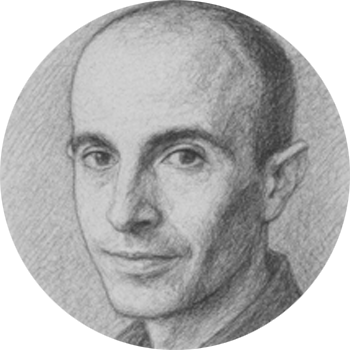
“AI is nowhere near its full potential – that’s also true for human beings, we are nowhere near our full potential. For every euro and minute that we spend developing AI, we should spend at least a euro and a minute on exploring and developing our own minds.”
- from a 2022 Nordic Business Forum talk by Yuval Noah HarariY, professor at the Hebrew University of Jerusalem, historian, philosopher, and author of “Sapiens” and ”21 Lessons for the 21st Century”
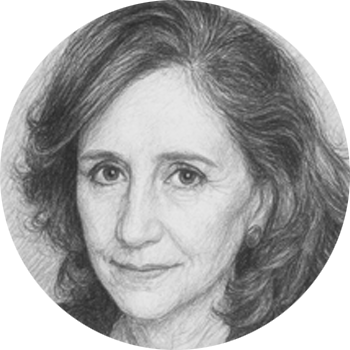
“In the wave of enthusiasm about generative AI, there has been renewed talk of technological determinism and ‘inevitable’ next steps to integrate algorithms into our intimate lives. But nothing is inevitable ... We can come back to each other and to ourselves. There is more than a threat to empathy at stake; there is a threat to our sense of what it means to be human. The performance of pretend emotion does not make machines more human. But it challenges what we think makes people special. Our human identity is something we need to reclaim for ourselves.”
- from “Reclaiming Conversation in the Age of AI,” by Sherry Turkle, MIT professor and author who studies the emotional connections between people and technology
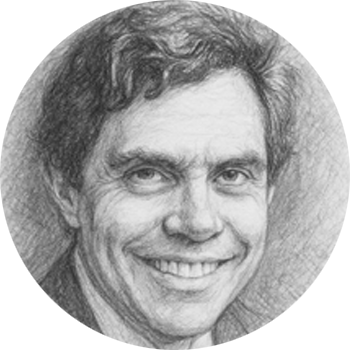
“Because the computer ‘thinks’ rather than works, its power to energize mechanistic metaphors is unparalleled and of enormous value to Technopoly, which depends on our believing that we are at our best when acting like machines, and that in significant ways machines may be trusted to act as our surrogates. Among the implications of these beliefs is a loss of confidence in human judgment and subjectivity. We have devalued the singular human capacity to see things whole in all their psychic, emotional and moral dimensions, and we have replaced this with faith in the powers of technical calculation.”
- from the 1992 book, “Technopoly: The Surrender of Culture to Technology,” by Neil Postman, author, media theorist and educator

“We should raise our new generations to be full humans, not machines. So for instance, now tech jobs are on the rise, but the arts will never go away. People caring for each other will never go away. Creativity will never go away. Scientific investigation will never go away. So, whoever you are, embrace that part of you and keep using and updating your knowledge of these tools. That’s important.”
- from an Atlassian interview with Fei-Fei Li, co-director of the Stanford University Human-Centered AI Institute and co-founder and CEO of World Labs
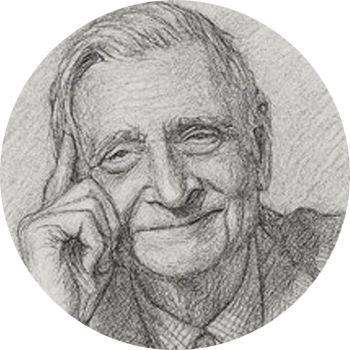
“In the 21st century, the world will not be run by those who possess mere information alone. Thanks to science and technology, access to factual information of all kinds is rising exponentially while dropping in unit cost. …We are drowning in information, while starving for wisdom. The world henceforth will be run by synthesizers, people able to put together the right information at the right time, think critically about it, and make important choices wisely.”
- from the 1998 book, “Consilience: The Unity of Knowledge,” by Edward O. Wilson, biologist and philosopher who explored ethics, human nature, consilience and sociobiology

“Students are using ChatGPT to give them summaries of articles and books and then write their essays for them, instead of their fostering their own abilities of interpretation (also a form of judgment), critical thinking and the various additional skills required for good writing. …The more that we offload these capacities to these systems, the more we thereby undermine our own skills and abilities. Precisely those named here: the capacity to learn, innovative thinking and creativity, decision-making and problem-solving abilities, and the capacity and willingness to think deeply about complex concepts.”
- from an essay for the Imagining the Digital Future report: “Being Human in 2025” by Charles Ess, professor emeritus, University of Oslo, Norway
Adapted from the Student Guide to Artificial Intelligence (2026), developed by Elon University’s Imagining the Digital Future Center in partnership with American Association of Colleges and Universities. Used with permission under the Creative Commons BY-NC-SA license.
Have a Question?
Take a look at frequently asked questions about AI at NIU and available resources.