Human Wisdom for the Age of AI Faculty Guide
Lesson 3: Focused and Deep Thinking
Time required: 45-60 minutes
This lesson teaches students to recognize the drawbacks of shallow skimming and the value of deep, focused study.
Learning Objectives - help students to
- Understand the cognitive cost of multitasking and shallow work
- Use the "Depth Gauge" tool to intentionally switch between AI-assisted scanning and human-only deep work
- Practice the discipline of "disconnecting" to synthesize complex ideas
Materials
- Student devices with access to a GenAI tool
- Depth Gauge worksheet
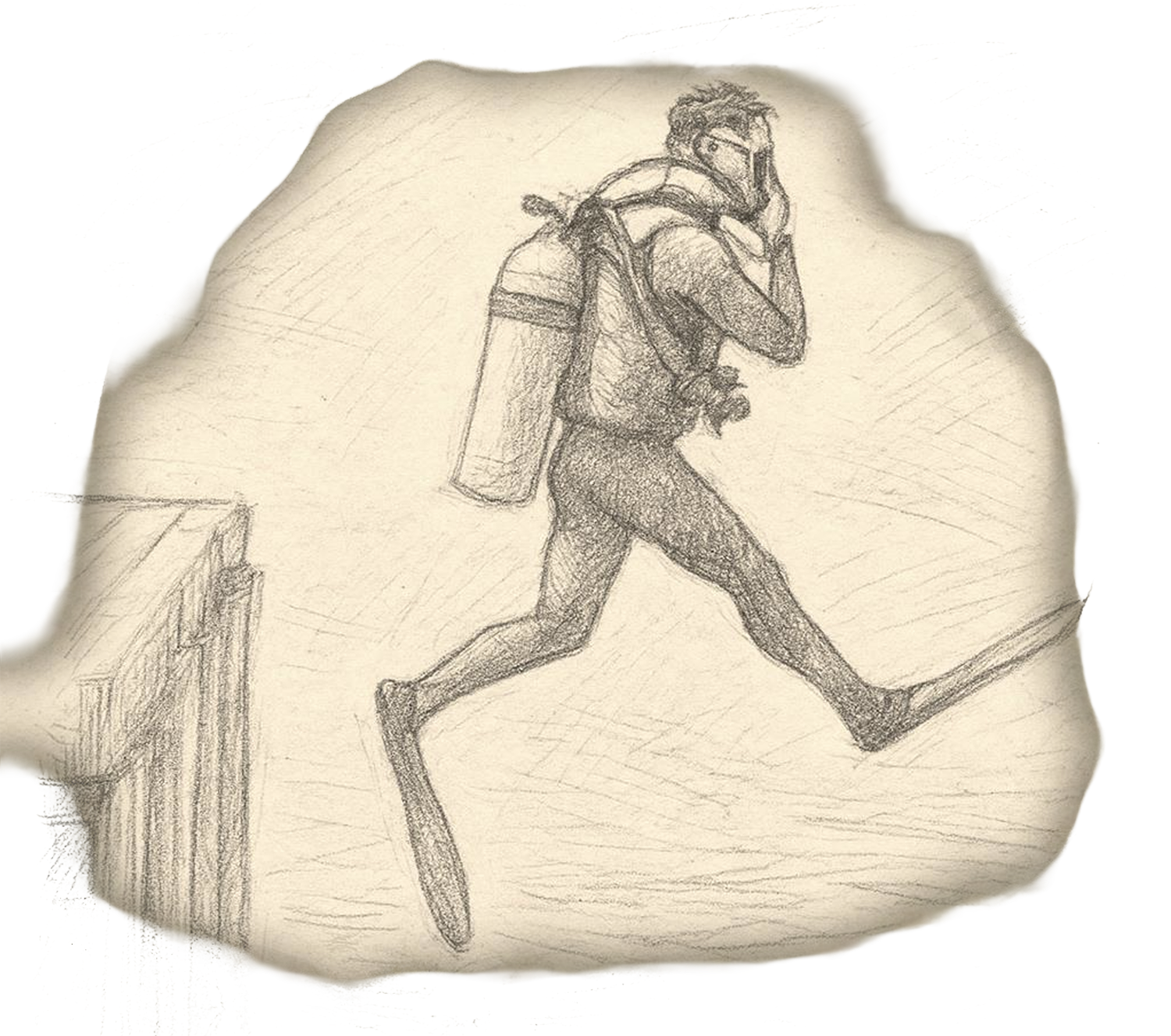 Deep Diving
Build your capacity for attention, memory and deep work
The ease and speed of using AI can lead to shallow thinking and off-track, distracting multitasking. By consciously taking deeper dives in their studies, students can build their mental muscles and develop capabilities for critical thinking, exploration and discovery.
Developing the skill of "Deep Diving" means knowing when to swim on the surface, when to use AI as a snorkel (for scanning beneath the surface and surfacing ideas) and when to put the AI tools away to scuba dive at a deeper level. Critical to this process is helping students develop the ability to disconnect from instant answers to reach the depths of human thinking and serious research with original sources—synthesis, complexity and original insight — that AI cannot support.
Seneca the Younger
4 BC - 65 AD
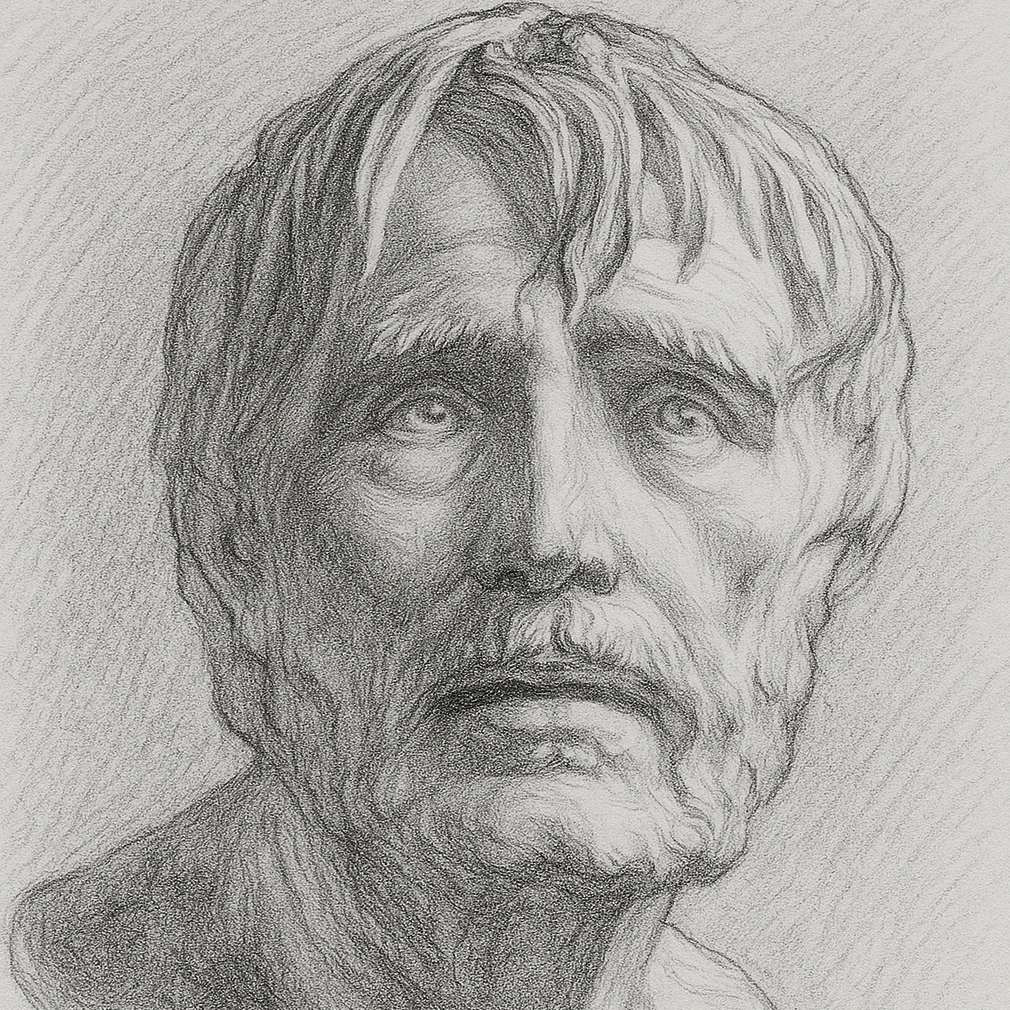
Roman Stoic philosopher, statesman and playwright, influential in moral philosophy
You do not run hither and thither and distract yourself by changing your abode; for such restlessness is the sign of a disordered spirit. ...To be everywhere is to be nowhere.”
From: “Letters From a Stoic: On Discursiveness in Reading” Letter 2
Written approximately 62-65 AD
- Seneca warned against "discursiveness"—the habit of flitting from book to book without ever settling down to digest information. He argued that true understanding requires engaging deeply with a single idea.
- In the age of AI, we can be "everywhere,” scanning summaries of many topics in minutes. Seneca reminds us that skimming is not knowing. If we let AI do the thinking, our minds become "disordered spirits," incapable of depth.
Engage the Class
Start the conversation: “When you use AI to summarize a reading, do you feel like you learned it, or just that you processed it? What is the difference between knowing an answer and understanding a concept?”
Let's go: “Today, we are going to practice the art of the Deep Dive. We will use AI to scan the surface, but then we will disconnect to do the hard, higher-pressure work of real thinking and serious research.”
Exercise
The Depth Gauge
Introduction (5 minutes)
Explain the metaphor: The ocean of information is vast. AI specializes in the waves (Surface Zone). Greater value lives below (Deep Zone). You need to know how and when to move between the zones.
The Surface Swim (5 minutes)
Choose a complex government policy issue, then have students open an AI tool, prompt it to summarize the key arguments, and read through the output quickly. Ask: How would you assess what the AI produced?
The Snorkel (5 minutes)
Ask students to pick one claim from the summary and challenge the AI: What is the counter-argument? Give me a concrete example.
The Scuba Dive (10 minutes)
Tell students to put the AI away, take out a pen and paper and write a one-page argument or concept map on the topic using only their own brain. If they get stuck, they should provide credible original sources and data. No reliance on the AI.
Decompression (5 minutes)
How did it feel when you hit a wall and couldn't ask the AI? Did you eventually break through? That struggle is where the learning happened.
The Depth Gauge: Dive Log
Topic:
The Surface Zone (Human + AI)
Prompt the AI for a summary. What are the top 3 surface-level facts?
Notes:
The Transition Zone (Human + AI + Critical Thinking)
Put on your snorkel. Ask the AI for a counter-argument or a specific detail. What did you find that wasn't obvious from the surface?
Notes:
The Deep Zone (Human Only - AI OFF)
Disconnect. Write a short paragraph synthesizing what you learned with your own thinking and research independent of AI.
My own thinking:
Reflection
Compare your "Deep Zone" paragraph to the "Surface Zone" summary. What original idea or connection did you discover by doing the hard work yourself? Will you remember this idea longer than the ones generated quickly by AI?
Notes:
Question 1
Seneca says, "To be everywhere is to be nowhere." How does this apply to your browser tabs? When you are using AI to multitask, are you actually accomplishing more, or are you just "running hither and thither"?
Question 2
During the ”scuba" phase (no AI), did you feel an urge to check your phone or look up an answer on AI? That urge is the "pressure" of deep work. How can we build the tolerance to sit with that pressure longer?
Question 3
The guide claims that "value isn’t found in the waves; it's found in the depths." In your future career, what kind of tasks will be ”surface" tasks (for AI) and which will be ”deep" tasks (for you)?
Question 4
Some people argue that "deep work" is obsolete because AI can generate deep insights instantly. Do you agree? Can a machine do "deep work," or is that a uniquely human process?
Question 5
How can you use the "Depth Gauge" to plan your homework? (e.g., Use AI for the first 10 minutes to scan, then turn it off for the next hour to write and research.)
Reflective Assessment
How well did this module enable students to:
- Recognize the feeling of "shallow" vs. "deep" cognitive work?
- Articulate the value of "struggle" in the learning process?
- Disconnect from technology to synthesize ideas independently?
How can you build on this lesson to help students develop focus stamina?
Adapted from the Student Guide to Artificial Intelligence (2026), developed by Elon University’s Imagining the Digital Future Center in partnership with American Association of Colleges and Universities. Used with permission under the Creative Commons BY-NC-SA license.
Have a Question?
Take a look at frequently asked questions about AI at NIU and available resources.