Human Wisdom for the Age of AI Faculty Guide
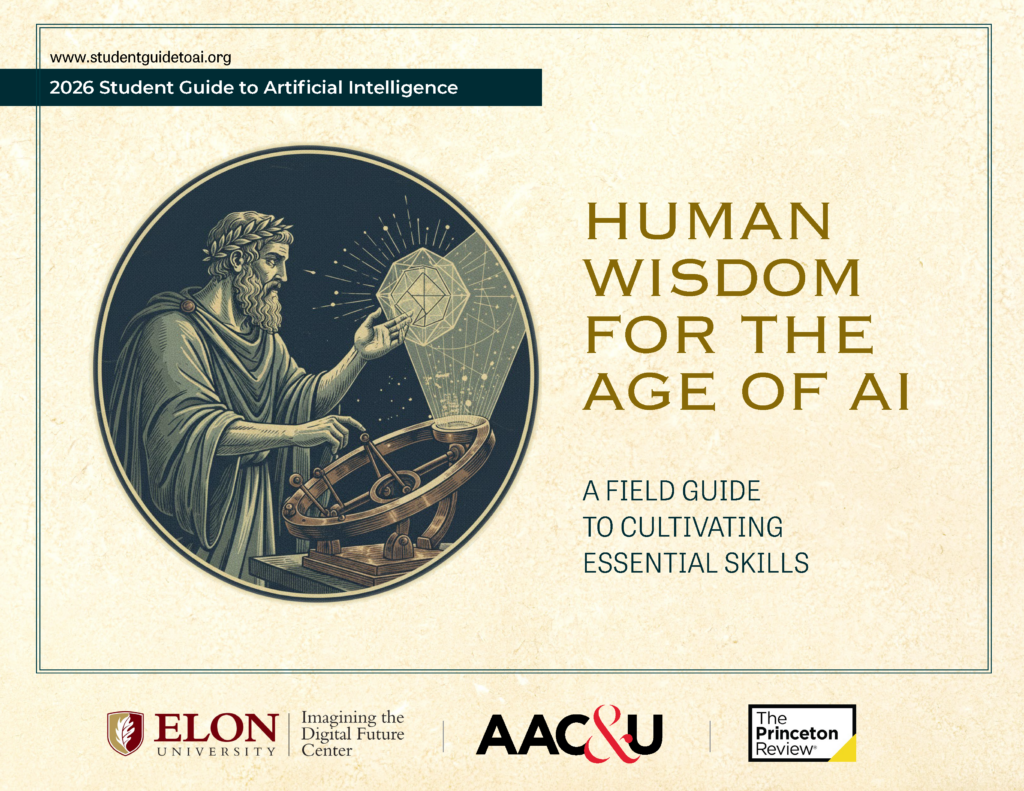 Each human capacity page in this guide includes a companion teacher’s guide that can be used with classes and workshops. The learning modules include lesson suggestions, worksheets and discussion questions to help students learn more about the great thinkers and explore the human capacities through active learning exercises. The modules can be used in any order and can be adapted by faculty to align with course goals and content.
View the Faculty Guides
Using the Human Wisdom Self-Assessment in Class
Faculty may choose to use the Human Wisdom Self-Assessment tool in connection with this guide. It is a formative diagnostic, not a test – designed to help students reflect on their current relationship with AI tools before engaging with course content and assignments.
Important Framing for Students
- There are no “good” or “bad” scores
- Results are not grades
- Scores reflect habits, not potential
Recommended Use
- Have students complete the scorecard before reading the Human Wisdom Field Guide
- Do not ask students to share scores publicly
- Invite students to reflect privately or in small groups
Suggested Discussion Prompts
- Which human capacity surprised you most?
- Where does AI help you think better?
- Where might it be quietly replacing effort or judgment?
Why This Matters
Students often assume AI literacy is about tools. This activity reframes AI literacy as a human development challenge — one centered on judgment, ethics, creativity and purpose. Used early in a course, the scorecard establishes a shared language and helps students approach AI intentionally rather than passively.
Adapted from the Student Guide to Artificial Intelligence (2026), developed by Elon University’s Imagining the Digital Future Center in partnership with American Association of Colleges and Universities. Used with permission under the Creative Commons BY-NC-SA license.
Have a Question?
Take a look at frequently asked questions about AI at NIU and available resources.