Human Wisdom for the Age of AI Faculty Guide
Lesson 5: Emotional and Social Intelligence
Time required: 45-60 minutes
This lesson teaches students to recognize that AI handles information and data, but the best work requires human, “high-bandwidth” connections to reach the highest levels of quality.
Learning Objectives - help students to
- Evaluate the limitations of working alone with AI in a silo
- Understand how human collaboration exposes blind spots that AI misses
- Practice "boosting the signal" by subjecting AI drafts to human friction and debate
Materials
- Student devices with access to a GenAI tool
- Signal Bars worksheet
 EI and SI
Enhance your emotional intelligence (EI) and social intelligence (SI) - essential assets in working with AI and others
In a world increasingly mediated by technology, working in isolation with AI can create a low-quality echo chamber. While AI can generate impressive content, it lacks the social perspectives required to vet ideas against reality, build trust and integrate diverse perspectives. Research on collective intelligence demonstrates that diverse groups outperform individuals on complex tasks
We can help students appreciate the importance of emotional and social intelligence by demonstrating the ways that human connections improve our AI-assisted work. This module uses the "Signal Bar" tool to teach students how to break out of the AI silo and use human collaboration as an essential component of machine-generated work.
Mary Parker Follett
1868 - 1933
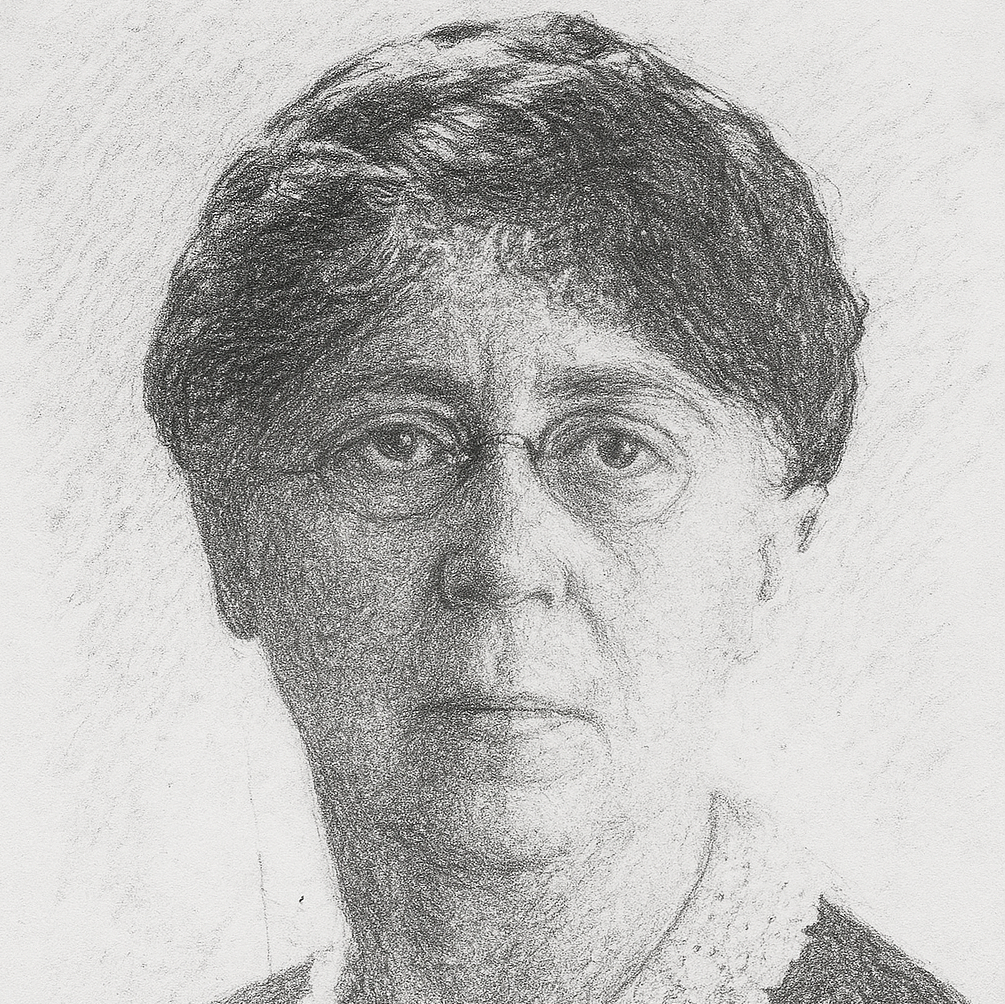
American social theorist and management pioneer, influential in organizational theory and democratic leadership
“The individual is created by the social process and is daily nourished by that process. There is no such thing as a selfmade man. What we think we possess as individuals is what is stored up from society, is the subsoil of social life.”
From: “The New State” Chap. VII. The Individual
Published: 1918
- Follett rejected the myth of the "self-made man." She argued that we are like plants growing in the "subsoil" of society—we draw our life, intelligence and identity from our relationships with others.
- AI is an individual tool. It allows us to work alone in a silo. But Follett reminds us that we wither without the nourishment of the social process. If we let AI replace our human interactions, we cut ourselves off from the human influences that improve our work and make us smart and resilient.
Engage the Class
Start the conversation: "Have you ever asked ChatGPT for advice, and it just politely agreed with you or gave you input it thought you wanted to hear? AI can be the ultimate 'Yes Man.' It doesn't care if you fail.”
Let's go: “Today, we’re going to see why a messy, difficult conversation with a human is safer and smarter than a smooth conversation with an AI tool."
Exercise
The Signal Strength

Introduction (5 minutes)
Explain the metaphor: Working alone with AI (1-bar signal) is fast but fragile—you risk "echo chamber" errors. To build robust ideas, you must increase the signal strength by adding human minds.
Step 1: The 1-bar sprint (5 minutes)
Have students work alone with AI to develop the best plan for a community service project that needs to be completed this semester.
Step 2: The 2-bar quality check he gap analysis (10 minutes)
Have students pair up, swap their AI-produced plans and give verbal feedback to each other, analyzing the quality of the AI output and what it may not be considering.
Step 3: The 3-bar group integration (15 minutes)
Merge the pairs into groups of four and ask them to discuss the various ways that AI approached the service project question. Ask each of the groups to agree on the best plan for the service project. Then have them compare that plan with the original output of the AI tools and discuss ways that the human interaction influenced the group’s final decision. Ask the group to identify one specific human value (e.g., fun, inclusivity, local connection) that the AI might have undervalued.
The Signal Strength Project Log
The Mission: Develop the best plan for a class community service project.
STEP 1: The 1-bar sprint (you + AI)
Prompt your AI tool to propose a service project plan. Summarize the output here.
The AI’s project idea:
STEP 2: The 2-bar quality check (you + a peer)
Swap plans with a partner. Critique the AI's ideas. Be the ”quality check."
My partner’s critique of my plan:
STEP 3: The 3-bar integration (you + a group)
Merge into a group of 4. Discuss all the plans. Don't just vote; INTEGRATE. Create a new ”super-plan" that combines the best AI logic with the best human values.
Our final group plan:
How is this better than the original AI versions?
How did the group discussion influence the final choice?
Question 1
Mary Parker Follett says we are “nourished” by the social process. In the exercise, did the human feedback feel “nourishing” (helpful/real) even if it was critical? Why does AI praise feel empty compared to human critique?
Question 2
In the exercise, did the AI outputs match each other, or did they conflict? How did using emotional intelligence and the views of others help you resolve those conflicts better than just looking at the AI output?
Question 3
As AI gets better at "doing the work" (coding, writing), will human skills like conflict resolution and empathy become more valuable or less commonly used? Why?
Question 4
How do you feel when you know your teammate or coworker says they used only AI in their work and did not involve other humans? Do you still trust the quality of the work or do you have greater doubts?
Question 5
Follett warns against "domination" (one person ruling). AI can be a form of domination—it gives the loudest, fastest answer. How can working with others along with AI guard against this domination? Are there drawbacks of bringing more humans into the equation?
Reflective Assessment
How well did this module enable students to:
- Move from AI outputs to shared group strategy?
- Practice active listening and integration (not just voting)?
- Articulate the value of human connections in the workplace?
How can you help students integrate humans + AI in their work?
Adapted from the Student Guide to Artificial Intelligence (2026), developed by Elon University’s Imagining the Digital Future Center in partnership with American Association of Colleges and Universities. Used with permission under the Creative Commons BY-NC-SA license.
Have a Question?
Take a look at frequently asked questions about AI at NIU and available resources.