Human Wisdom for the Age of AI Faculty Guide
Lesson 10: Self-Identity
Time required: 45-60 minutes
This lesson teaches students to decouple their identity from their "output" (which AI can replicate) and attach it to their "purpose" (which is uniquely human).
Learning Objectives - help students to
- Differentiate between a job (a set of tasks) and a purpose (a set of values)
- Articulate a professional identity that is resilient to automation because it is based on human connection and meaning
- Apply the ”target practice" framework to analyze their career path
Materials
- Student devices with access to a GenAI tool
- The Target Practice worksheet
 Your Meaning and Purpose
Define who you are when AI can do what you do
AI may change your situation—your job duties, your career path, and the tools you use. If your identity is tied to "I write code" or "I analyze spreadsheets," you are one-dimensional and vulnerable. If your identity is "I solve problems for people," you are powerful and noble.
Helping students develop the skill of "The Meaning Maker" means urging them to decouple their identity from their tasks and attach it to their deeper purpose in life. This is the key to personal fulfillment and the ultimate defense against obsolescence.
Mencius
371 - 289 BC
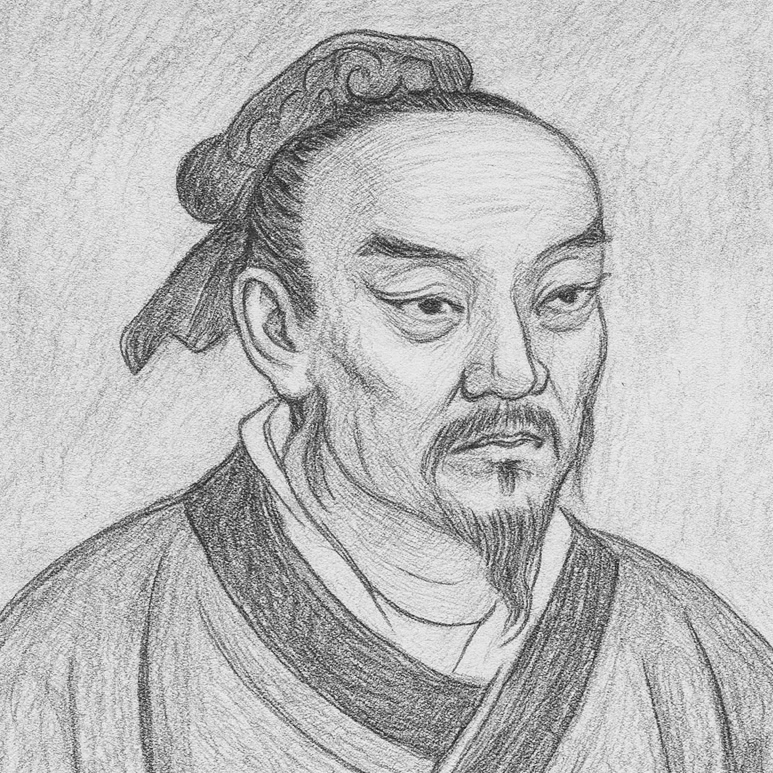
Chinese Confucian philosopher who emphasized human goodness, benevolent governance and moral responsibility of rulers
“Those who follow that part of themselves which is great become great men; those who follow that part which is little become little men.”
From: “The Mencius” Book 6, Chapter XV
Published: 4th century BC
- Mencius taught that we all have a "Greater Part" (our capacity for benevolence, righteousness and meaning) and a "Lesser Part" (our biological needs and routine functions).
- AI excels at the "Lesser Part"—it handles routine, calculation and output. If we define ourselves by these tasks, we become "little." But AI cannot create the "Greater Part"—our capacity to care, to lead and to infuse work with meaning. To thrive in the AI age, we must follow the Greater Part.
Engage the Class
Start the conversation: "If an AI could do 80% of your future job faster and better than you, would you still have a reason to show up? What is the part of your work that a machine can never take away because it depends on who you are?"
Let's go: “Today, we are going to do some target practice. We will move our focus from the outer ring (tasks) to the bullseye (purpose) to build a career that is fulfilling and AI-proof.”
Exercise
Target Practice
Introduction (5 minutes)
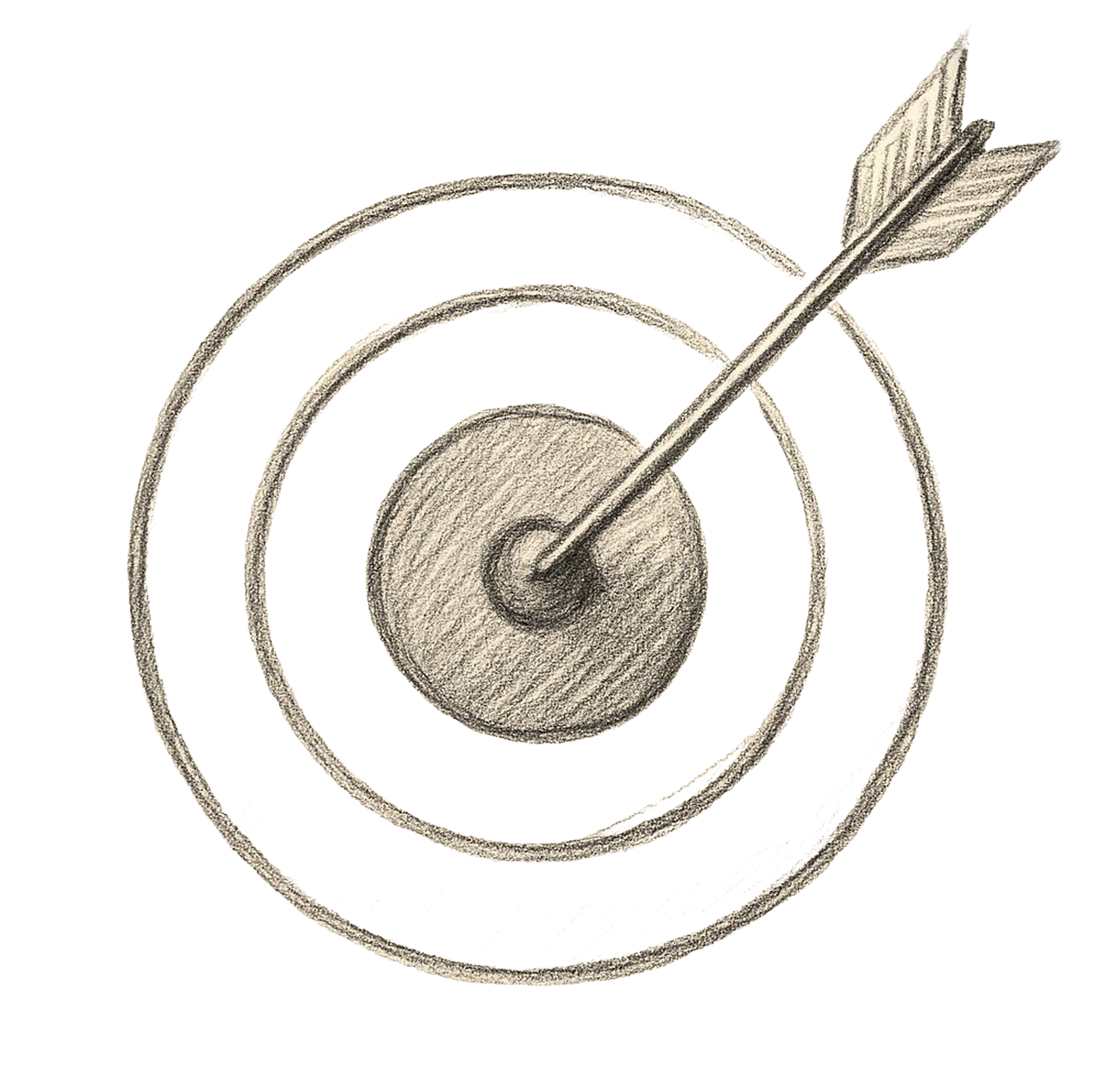
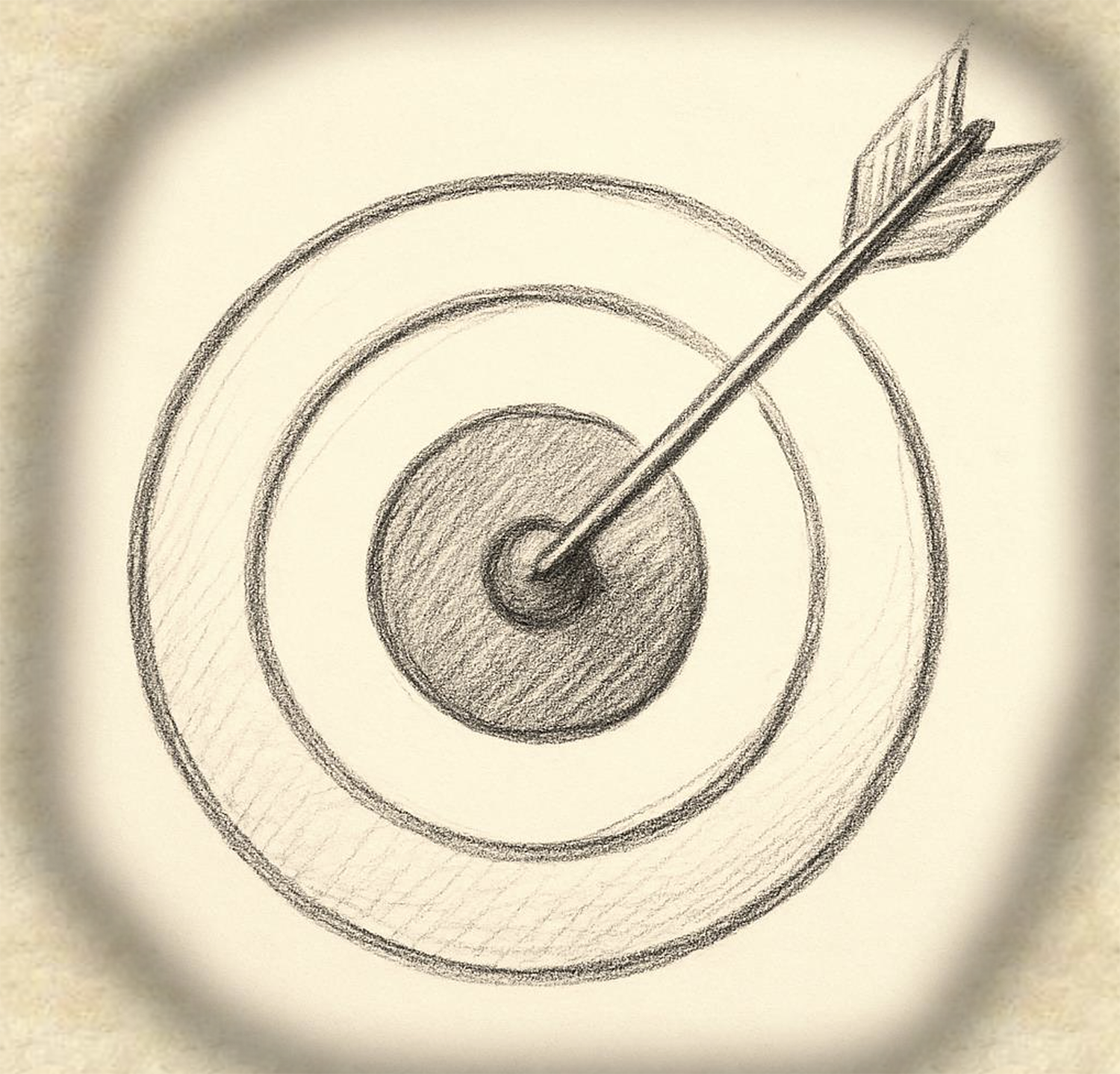
Explain the metaphor: Your career is a target. The outer ring represents your foundational skills. These are essential—you must know them to play the game—but because AI can also do them, they are no longer enough to win. To thrive, you must aim for the bullseye.
Outer Ring Check (10 minutes)
Have students list the core, entry-level tasks of their future field. Explain: "You need to master these skills to understand the work. But ask yourself: If an AI can do this task in seconds, what else must I bring to the table to be valuable?”
Zeroing in on the bullseye (10 minutes)
- Middle Ring Check: Learning to use foundational (outer ring) skills strategically to become a respected leader
- Bullseye Check: Knowing the core tasks, using them strategically, and understanding the higher purpose – why we are doing the work and how that serves humanity and makes the world a better place.
The Share (10 minutes)
Have students practice introducing themselves. Instead of stopping at the outer ring, they must explain the purpose and outcome of their work (bullseye). Ask: “Did it feel different to describe your work by its purpose rather than its mechanics?”
Target Practice: Identity Map
My Current career path:
THE OUTER RING (The Foundation)
List the essential technical skills you are learning to work in your field.
My Core Skills:
Reality Check: AI can automate the execution of these tasks. Therefore, knowing how to do them is my baseline, not my ceiling.
THE MIDDLE RING (The Strategy)
How do you apply these skills in complex situations?
Strategic Application:
Human-AI Partnership: "I will use AI to speed up the [outer ring task] so I can spend more time on [middle ring strategy]."
THE BULLSEYE (The Purpose)
This is your unique human value. Why does your work matter to others?
Who do I help?
What problem do I really solve for them?
SYNTHESIS
Rewrite your LinkedIn Headline/Bio based on the Bullseye:
Question 1
Mencius distinguishes between the "Great Self" (purpose) and the "Little Self" (tasks). Why is it so easy to get stuck in the ”little self" of checking boxes and completing assignments? How does AI make that trap even more dangerous?
Question 2
Look at your ”bullseye" statement. Is it something a machine could claim? Why is ”meaning" a human-to-human resonance that code cannot replicate?
Question 3
Why is decoupling your identity from your tasks so psychologically difficult? If you have spent four years learning a set of professional skills, how does it feel to be told those skills are not your core identity? How do you manage that ego shift?
Question 4
In a future where "work" (labor) is cheap, do you think "purpose" (intent) will become a luxury or a necessity? Will people pay more for things made with human intention?
Question 5
At the end of a career, people rarely talk about the "outputs" they generated. They talk about how they made people feel. How does knowing that change how you approach your AI tools today?
Reflective Assessment
How well did this lesson enable students to:
- Articulate a purpose statement that transcends specific tasks?
- Differentiate between "doing a job" and "bringing meaning to a job"?
- Feel a sense of agency in defining their own value?
How can you build on this module to help students navigate identity crises?
Adapted from the Student Guide to Artificial Intelligence (2026), developed by Elon University’s Imagining the Digital Future Center in partnership with American Association of Colleges and Universities. Used with permission under the Creative Commons BY-NC-SA license.
Have a Question?
Take a look at frequently asked questions about AI at NIU and available resources.