Human Wisdom for the Age of AI Faculty Guide
Lesson 8: Ethics
Time required: 45-60 minutes
This lesson teaches students to treat ethics not as a vague feeling, but as a rigid ”lockout" system that prevents them from crossing dangerous lines.
Learning Objectives - help students to
- Identify three specific domains of AI ethics: agency (self), privacy/property (others), and human rights (society)
- Recognize that convenience often disguises itself as efficiency, leading to the loss of sovereignty
- Practice "opening the locks" by verifying their work against ethical standards
Materials
- Student devices with access to a GenAI tool
- The Three Keys worksheet
 Guiding Principles
Set firm ethical boundaries in working with AI to protect people, property and society
AI offers a seductive bargain: convenience in exchange for control. Every time we let an algorithm decide what to write or think, we surrender a piece of our autonomy. Critical ethical boundaries in the AI age include protecting our own sovereignty and the rights of others.
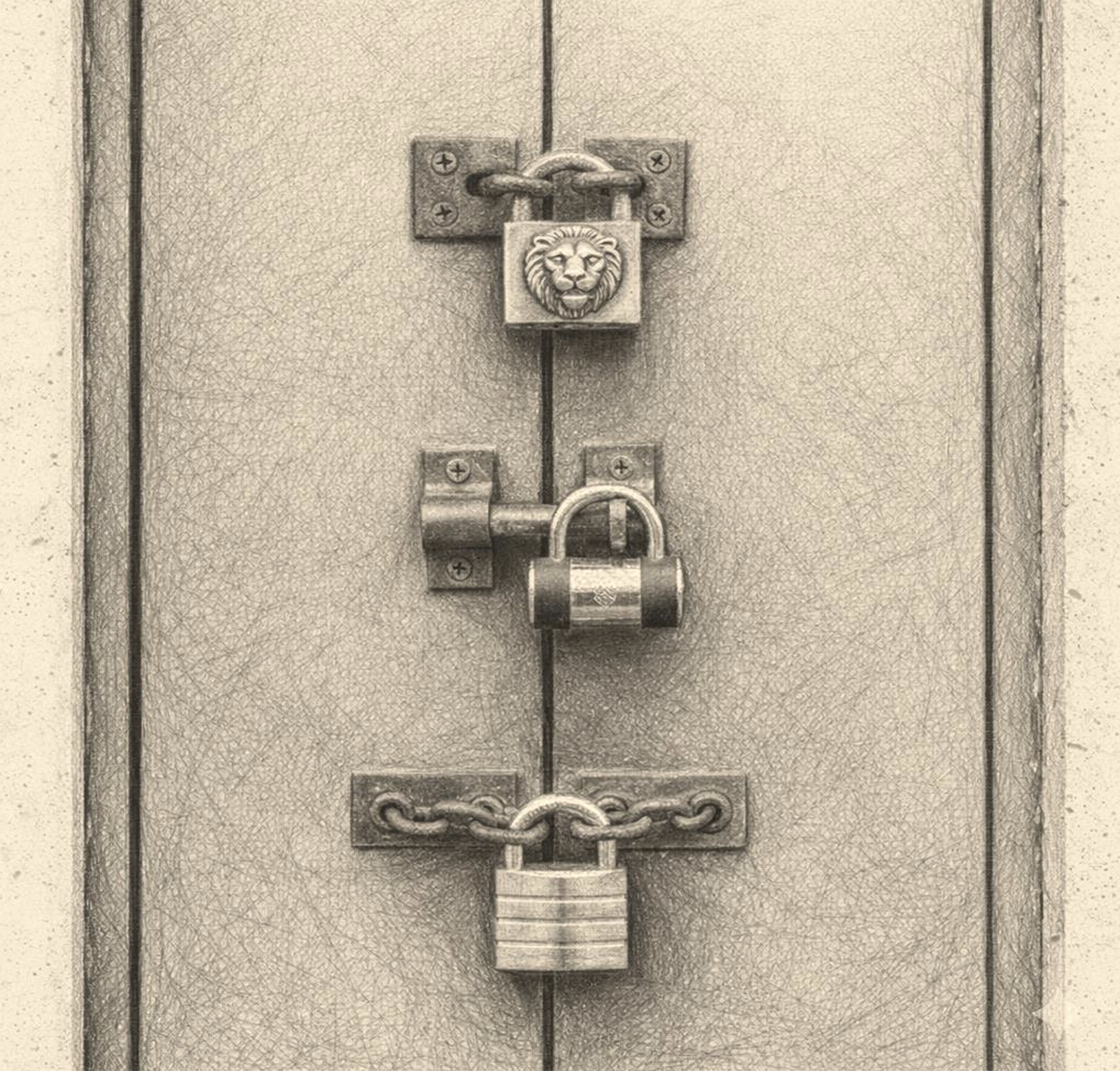
In helping students develop their ethical foundations, we can teach them ways to install a sturdy door with three locks. They must have the keys – agency, privacy/property and human rights – in hand before they can proceed. The locks represent bedrock ethical principles, helping students avoid the temptation of making bad choices when they’re under deadline pressures.
Ptahhotep
About 2400 BC
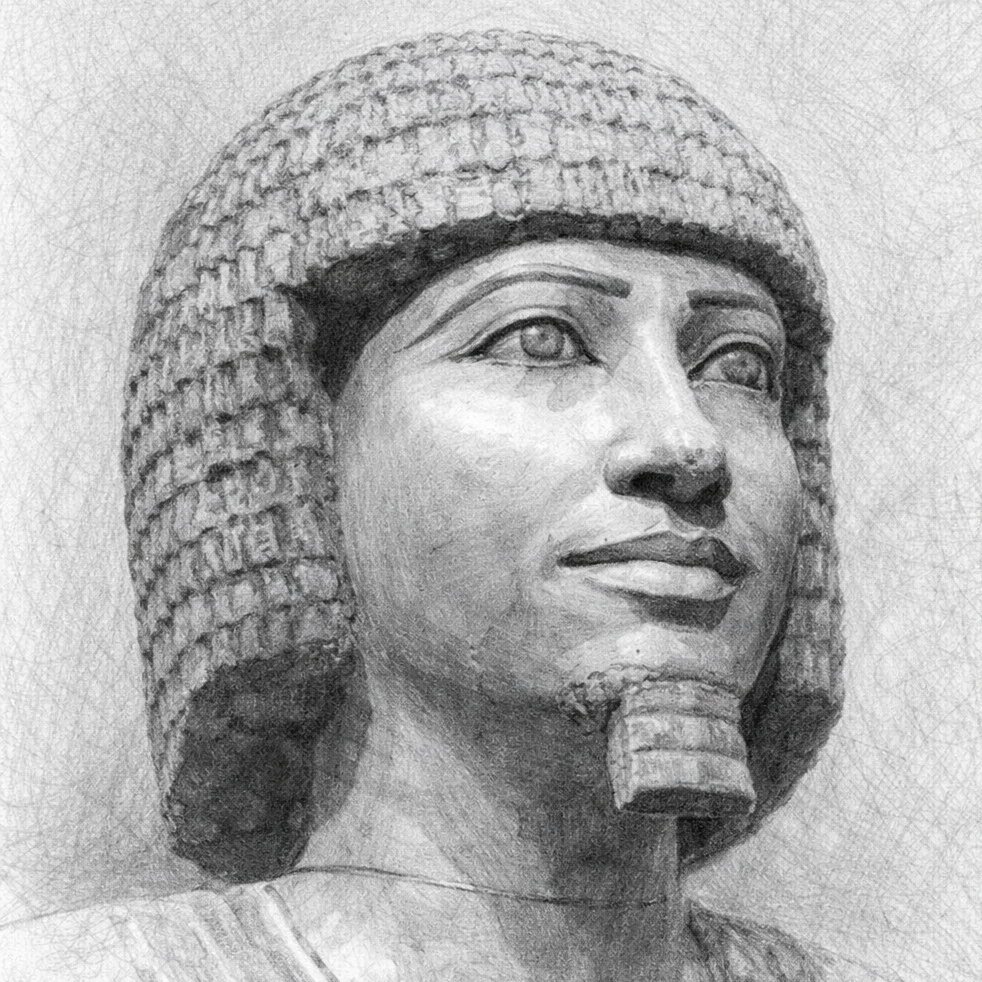
Ancient Egyptian minister renowned for his “Maxims,” one of the earliest known works of moral and ethical instructions
“Endeavour always to be gracious, that thine own conduct be without defect ...If thou desire that thine actions may be good, save thyself from all malice, and beware of the quality of covetousness, which is a grievous inner malady.”
From: The Instruction of Ptahhotep Maxims #5 and #19
Written: About 2400 BC
- Ptahhotep advocated ethical living through virtues like humility, truthfulness, selfcontrol against greed and anger, and just leadership. He emphasized that good conduct aligned with divine order brings prosperity and lasting respect.
- AI complicates ethics. "Is it cheating if the AI wrote 30%?" "Is it stealing if the AI scraped the art?" If the output is hallucinated (not true) or steals from creators (not right), don’t use it.
Engage the Class
Start the conversation: "Does anyone have a 'line in the sand' for AI? Is there anything you would never ask ChatGPT to do, even if it saved you 10 hours? Why is that your line?"
Let's go: “Today, we are going to install a security system for our work. We will use the ‘Three Keys’ to ensure we never accidentally cross the line.”
Exercise
The Three Keys
Introduction (5 minutes)
Explain the concept: You are about to launch a project. The door is locked. You need three keys to open it. If you are missing one, you cannot launch.
The Padlock Drill (10 minutes)
Divide the class into groups. Assign each group an AI use challenge (e.g., "Cloning a celebrity voice," ”Plagiarizing content for an assigned essay," ”Sharing AI-generated information that cannot be verified").
Task: Ask students to identify how their use of AI could violate the three keys rules:
- Agency: Does the user cede control of their work to AI?
- Property: Is material used without proper permission?
- Human Rights: Is bias or slanted information present?
The Key Check (20 minutes)
Ask each group to evaluate which “keys” wouldn’t turn in the locks and determine how they could fix the situation so the key will work. (e.g. give proper attribution, anonymize details and identifying information, etc.)
The Verdict (10 minutes)
Ask each group: "What specific action did you take to unlock the door?" This teaches that ethics is about corrective action, not just guilt.
The Three Keys: Security Check
Project name:
KEY 1: AGENCY (My Mind) Am I the pilot or the passenger on this project?
[ ] I defined the prompt and the goal
[ ] I verified the output
[ ] I can explain every word in this document without looking at the AI
If unchecked, how do I reclaim control?
KEY 2: PROPERTY Am I stealing or sharing?
[ ] I did not input private/personal data
[ ] I am not mimicking a specific living artist/writer without credit
[ ] I have cited my sources, including the AI
If unchecked, how do I fix the privacy/credit issue?
KEY 3: RIGHTS (Human Impact) Am I adding truth or noise?
[ ] I checked for hallucinations (lies)
[ ] I checked for bias/stereotypes
[ ] This work does not harm anyone
If unchecked, what harm must I prevent?
FINAL STATUS
[ ] LOCKED (One or more keys missing. Do not submit.)
[ ] UNLOCKED (All keys present. Proceed with integrity.)
Question 1
Ptahhotep says our personal conduct should be “without defect." AI often "hallucinates" convincing lies. If you submit an AI paper with a lie in it, are you a liar, or just "unlucky”? Who bears the moral weight?
Question 2
Key 1 is "Protect your Agency." Why is it an ethical issue to let your own skills atrophy? Is wasting your own potential a moral failure, or just a practical one?
Question 3
Many AI models are trained on copyrighted books and art without payment. When we use these tools, are we complicit in theft? How can we use the tools while still respecting Key 2 (Property)?
Question 4
Think about Key 3 (Human Rights). AI can generate thousands of fake comments or deepfakes in seconds. How does this speed change the scale of ethics? Does "easy" evil make us even more liable for damages that occur?
Question 5
The "Whistleblower" Test: If you saw a classmate using AI in a way that violated Key 2 (Privacy - e.g., posting someone's private texts into a bot), would you say something? Why is the digital world often treated as an "ethics-free zone"?
Reflective Assessment
How well did this lesson enable students to:
- Identify the three distinct domains of AI ethics (self, others, society)?
- Recognize the privacy and property risks inherent in LLMs?
- Audit their own work for ethical violations.
How can you build on this lesson to help students develop moral courage?
Adapted from the Student Guide to Artificial Intelligence (2026), developed by Elon University’s Imagining the Digital Future Center in partnership with American Association of Colleges and Universities. Used with permission under the Creative Commons BY-NC-SA license.
Have a Question?
Take a look at frequently asked questions about AI at NIU and available resources.