The Storyteller
Develop your unique human capability to influence others and inspire positive action
Why this matters: AI can generate fluent text on demand. Humans are storytellers shaped by lived experience. In a world filled with machine-made content, effective communication is critical. Your advantage is building trust – with judgment, transparency and care – so others feel understood and follow you willingly.
Mini-tool: The Persuasion Triangle
As you write, speak or put together your presentation, make sure your message includes all three elements of an effective communication. Each corner of the triangle is essential to your argument.

Logos (logic)
AI can help summarize facts and provide a logical argument but only you can decide if those facts and arguments are appropriate for the situation and if the audience will likely find them persuasive.
Pathos (emotion)
You must provide what AI cannot: human emotion. Provide a personal anecdote or metaphor and frame the data in terms of human impact.
Ethos (character)
AI has no reputation, no history and no accountability for real outcomes. You provide the credibility, trustworthiness, transparency and unique voice of the speaker.
Try It
Check a draft of your work using the three corners
Logos: Is the argument sound? AI can help you here, but check the facts and make sure others understand your point.
Pathos: Highlight the sentences that would make a reader feel something. Write at least one sentence that connects the logic to a human emotion or story.
Ethos: Are you writing in a relatable human voice? Read it aloud and make sure it reflects your conviction and voice.
Example
You are writing a white paper for a new community program. Review your draft. Does it include:
- Facts and figures to justify the program
- A personal story of someone who would benefit from the program
- An honest and authentic tone
Adapted from the Student Guide to Artificial Intelligence (2026), developed by Elon University’s Imagining the Digital Future Center in partnership with American Association of Colleges and Universities. Used with permission under the Creative Commons BY-NC-SA license.
Have a Question?
Take a look at frequently asked questions about AI at NIU and available resources.
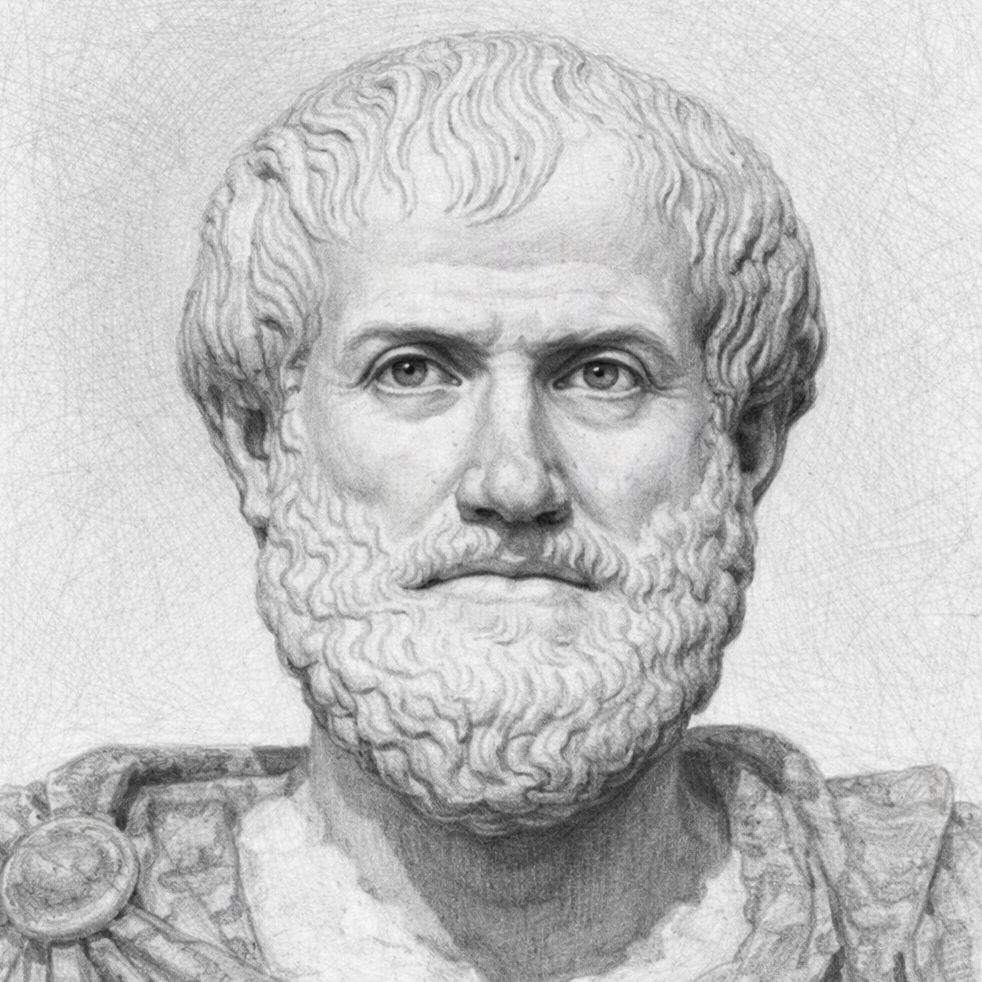
Aristotle
384 – 382 BC
Greek philosopher and polymath, student of Plato, tutor to Alexander the Great, foundational to Western thought
"The proofs furnished by the speech are of three kinds. The first depends upon the moral character of the speaker, the second upon putting the hearer into a certain frame of mind, the third upon the speech itself, in so far as it proves or seems to prove."