About the Community Prairie
The Community Prairie will be an approximately 45-acre native prairie in the heart of DeKalb, on NIU’s main campus. It will include native short- and tall-grass prairie habitat, mowed walking trails and interpretive signage. We welcome everyone to visit, observe and be inspired by the beauty of this historic Illinois landscape.
The Community Prairie will be located on NIU’s "North 40" property, east of campus along the Kishwaukee River bike trail.
Location of Community Prairie
Map Legend
Prairie restoration (approximately 45 acres)
Open space/practice field (approximately 7 acres)
Park district property with public access path (approximately 1/2 acres)
Pilot prairie (1.7 acres)
Objectives
The Community Prairie restoration project will restore approximately 45 acres of turfgrass into a thriving Illinois native prairie that supports local wildlife and reflects the land’s natural history. The project will invite the community to play an active role in caring for this landscape by offering accessible, hands-on opportunities to learn, participate and steward the prairie together.
Through partnerships and inclusive programs, this project welcomes people of all ages, backgrounds and experience levels. Students and community members will learn by doing, building meaningful connections to the land and to one another and sharing responsibility for the prairie’s long-term health. By creating an open and engaging nature reserve, this project will demonstrate how restoration and collaboration can work together to strengthen both ecosystems and community.
The Community prairie restoration Project is well aligned with the sustainability goals of our partners, as well as local and regional goals for our watershed.
| Goals | Community Prairie restoration project contributions to these goals | |
|---|---|---|
| NIU’s Sustainability and Climate Action Plan |
|
|
| City of DeKalb Sustainability Plan (PDF) |
|
|
| Illinois Department of Natural Resources (IDNR) Climate Action Plan (PDF) |
|
|
| DeKalb County Watersheds Upper South Branch Kishwaukee River Watershed Improvement Plan |
|
|
Project History
The Beginnings
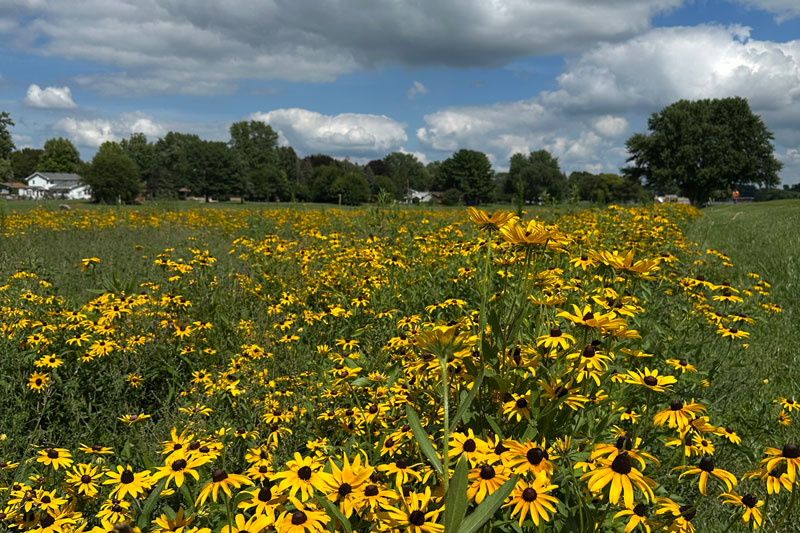
The Community Prairie restoration project started as a seed of hope and innovation. The hope of a space to live, learn and thrive, while showcasing important, hands-on experiences for everyone. Turning roughly 45 acres of turf grass into a prairie is no small feat and it began with just 1.7 acres.
Pilot Prairie
Campus Sustainability received two grants to create a pilot prairie project. With the help of the funders, DeKalb County Community Foundation and NIU Trek Talks via the Division of Research and Innovation Partnerships, the 1.7-acre pilot prairie came to life.
In the fall of 2024, NIU Grounds prepared the site, using careful deployment of a common herbicide. This was a one-time treatment that allowed for proper seeding.
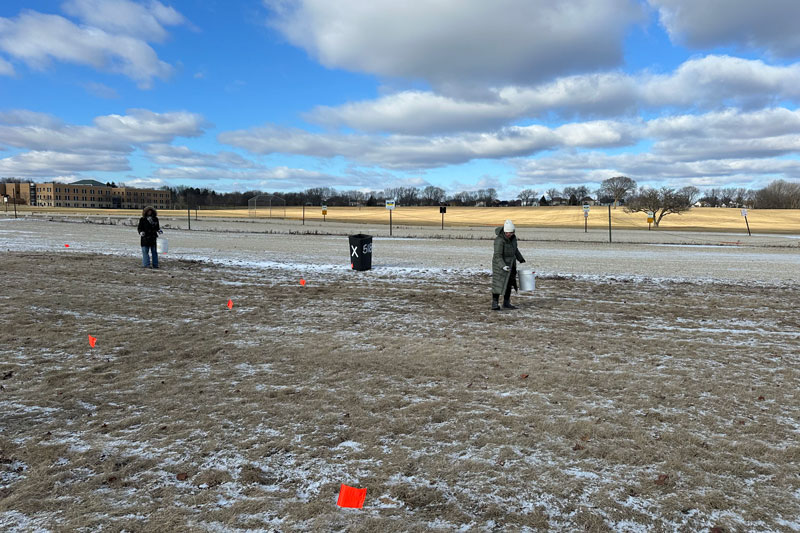
In January 2025, the Campus Sustainability team hand-sowed the site, resulting in the first active growing season in 2025.
Project Growth
While growing our pilot prairie, we began planning for a larger prairie nature reserve on campus. NIU is now ready to restore another roughly 45-acres of turfgrass into a thriving community prairie. The Community Prairie restoration project will be a lasting asset not only to NIU, but to the surrounding region, creating new opportunities to learn, play and grow together.
This project is an exciting opportunity to bring accessible greenspace to the center of the DeKalb and NIU communities. Through collaboration with campus and community partners, there will be opportunities for everyone to be part of creating this project.
Timeline
Prairies don’t grow overnight—they sleep, creep, then leap. It can take several years to fully establish a mature native prairie, but even as a prairie starts growing, you’ll see lots of exciting new plants and animals. Each stage of establishing a new prairie brings opportunities for learning, growth and development of programming, stewardship and engagement.
Prairie Growth Stages


Native Plantings In Progress
Year 0: Site Prep and Winter Seeding
Year 1: Sleep
Year 2: Creep
Year 3: Leap
Prairie Project Timeline
The follow chart illustrates the timeline of multiple projects fromJanuary 2026
through
December 2027