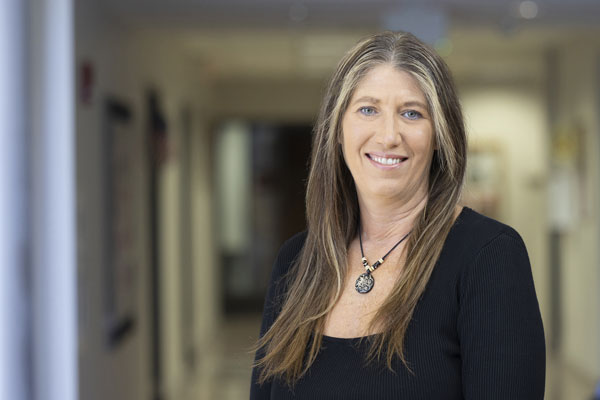
Tracy Ash
Director of Pre-health Professions
What year did you start working at NIU?
2007
Where is your hometown, and where do you live now?
Libby, Montana, and Kirkland, Illinois.
In what department do you work?
Pre-health Professions
What year(s) did you complete your degree(s) from NIU?
College of Health and Human Sciences: 2004, 2006
College of Education: 2023
What was your major or program of study?
Family and child development (B.S.), family and child studies (M.S.), and adult and higher education (Ed.D.).
What advice would you offer to current first-generation students at NIU?
My biggest advice to first-generation students is to ask questions. Lots of them. College has so many unwritten rules, and sometimes you simply don't know what you don't know. There is absolutely nothing wrong with asking someone to explain how something works, who you should talk to, or what your next step should be. Find your people at NIU — faculty, staff, advisors, mentors and other students who will support you and challenge you. Take advantage of opportunities, even if you're not completely sure you're ready for them. Apply for the internship. Join the organization. Go to office hours. Introduce yourself. Sometimes the opportunities that feel a little outside of your comfort zone are the ones that change your path. And don't get caught up comparing your journey to everyone else's. There is no perfect timeline for college or for figuring out what you want to do with your life. You can change your mind, take a different path, make mistakes and still get exactly where you're supposed to be. Just keep moving forward — and ask for help when you need it.
Where did you attend school? What degree(s) did you earn?
I started my college journey at community college before transferring to NIU. At NIU, I earned my B.S. in family and child development and my M.S. in family and child studies, both in the College of Health and Human Sciences. I later earned my Ed.D. in adult and higher education from NIU. I’m especially proud that my path started at community college. My educational journey wasn’t necessarily a straight line, but every step helped shape the work I do with students today.
Walk us through how your role connects to the student experience at NIU.
As director of the Pre-health Professions Program, I get to work with students at just about every point in their journey. Some students come to me their first semester knowing exactly what they want to do, while others come in saying, "I know I want to work in healthcare, but I have no idea what that looks like yet." Both are completely fine. A lot of my job is helping students take a really big goal — becoming a physician, dentist, PA, veterinarian, pharmacist, occupational therapist or another health professional — and break it down into something that feels manageable. We talk about courses, grades, clinical experience, shadowing, getting involved, preparing for entrance exams and eventually applying to professional school. Sometimes we also have honest conversations about what isn't working and what we need to change to get them where they want to go. But I don't just want to tell students they need experience; I want to help create ways for them to get it. A big part of my role is building partnerships and opportunities for NIU students, including shadowing, clinical certifications, professional development and connections with healthcare organizations and professional schools. Ultimately, I want students to leave my office with a plan, a better understanding of what comes next and the confidence that they don't have to figure all of this out by themselves.
What do you love about working at NIU?
What I love most about working at NIU is the students. I see so much of myself in many of them. Our students are hardworking and resilient, and many are balancing school with jobs, family responsibilities and a lot of other things happening in their lives. They may not always take the most traditional path, but that doesn't mean they aren't capable of doing incredible things. NIU also gave me opportunities that changed my own life. I came here as a transfer student and earned three degrees, and now I get to help students navigate their own journeys. There is something pretty special about that. What I really enjoy is being able to help a student figure something out that felt overwhelming before they walked into my office. Sometimes that's helping them make a plan, finding an opportunity they didn't know existed or just being honest with them about what they need to do next. I don't need to be the person in the middle of everything — I just like knowing that something I did made the path a little easier for a student.
Did you always plan to end up in higher education? What brought you to NIU?
Absolutely not! Higher education was never part of some carefully mapped-out career plan for me. I started at community college and transferred to NIU as a student, and like a lot of students, I was figuring things out as I went. My connection to NIU really grew from my own experience here. I had opportunities and people along the way who helped me see possibilities for myself that I hadn't necessarily considered. Eventually, I found my way into working with students and realized that I was pretty good at helping them navigate college — especially the parts that aren't always clearly explained. What started as a job became a career. I've now spent many years at NIU, earned three degrees here and had the opportunity to work with students in several different ways. I definitely didn't plan this path when I started college, but looking back, it makes a lot of sense that I ended up doing work centered around helping students figure out their own paths.
How do you see NIU's mission reflected in your day-to-day work?
I really believe students want to feel understood and appreciated. They want to know that someone sees them as a whole person and not just a GPA, a major or another name on a roster. To me, that is a big part of what being student-centered means. Every student comes to NIU with a different story. They have different strengths, challenges, responsibilities and goals, and I think we serve students best when we take the time to understand those things. In my role, that means listening, being honest with students about what it will take to reach their goals and helping them find a path forward that works for them. I also think NIU's commitment to creating opportunity is reflected in my work. I want students to have access to the information, experiences and resources they need to pursue their goals, regardless of where they started. If a student leaves my office feeling heard, valued and a little more confident about what comes next, I feel like I've done my job — and that is very much what NIU's mission means to me.
What keeps you motivated and energized in your work at NIU?
The students, without question. There is nothing better than watching a student go from, "I don't know if I can do this," to figuring out what they are capable of and what path actually makes sense for them. Of course, I love getting the email that someone was accepted into medical school, dental school, PA school or another professional program, but success doesn't always mean professional school. Sometimes the biggest win is helping a student realize that the path they started on isn't the right one for them and helping them find something that fits their strengths, interests and goals better. I also really appreciate the smaller wins along the way — a student passing a class they struggled with, getting their first clinical experience, finding a career they didn't know existed or coming back to tell me that something we talked about made a difference. Those moments remind me why the work matters. I don't need every student to end up where they thought they would when they first came to NIU. I want them to leave knowing themselves better, feeling confident in the direction they chose and knowing that their path is their own.
What's one thing about NIU that has surprised you?
I think what has surprised me most is how many different opportunities I've had at NIU. I came here as a transfer student focused on earning my degree, and I certainly wasn't thinking that I would eventually earn three degrees here and build my career here, too.
Over the years, I've had the opportunity to work with different students, programs, colleges and people across the university, and my own path has continued to evolve. I've learned that NIU is a place where your first plan doesn't necessarily have to be your final plan. That's something I try to remind students of too. Sometimes an opportunity, a conversation, or even a change in direction can take you somewhere you never expected — and sometimes that ends up being exactly where you needed to go.
How does your work support students who face financial, academic or personal challenges on their path to a degree?
I think the first step is recognizing that students don't leave the rest of their lives at the door when they come to campus. They may be dealing with financial stress, family responsibilities, work, academic struggles or personal challenges while still trying to figure out how to be successful in college. I try to understand what is actually happening before we start talking about solutions. Sometimes a student doesn't need another person telling them what they should have done differently. They need someone to listen, help them figure out what they can do now and connect them with the right resources. In pre-health, I also spend a lot of time talking with students about the financial side of preparing for professional school. Exams, applications, clinical certifications and other experiences can get expensive very quickly. Whenever possible, I try to connect students with free or low-cost resources and opportunities that make those experiences more accessible. Academically, I believe in being honest while still giving students a path forward. A difficult semester, a failed class or a change in circumstances may change the plan, but it doesn't necessarily end the goal. Sometimes we adjust the timeline, sometimes we rebuild academically and sometimes we discover a completely different path that is a better fit. My job is to help students understand their options and make the next decision from where they are now — not where they think they should have been.
What is most important for students to know about the office or department you work in, and what services do you provide?
The most important thing I want students to know about Pre-Health Professions is that you don't have to have everything figured out before you come see me. You don't even have to know exactly which health profession you want to pursue. Part of my job is helping you explore your options and figure out what path makes sense for you. Pre-Health Professions supports students interested in medicine, dentistry, physician assistant studies, pharmacy, veterinary medicine, occupational therapy, optometry and other health professions. I work alongside students' academic advisors to help them understand professional school prerequisites, plan their pre-health coursework, explore different careers and understand what makes a competitive applicant. But pre-health is about much more than taking the right classes. I also help students find clinical experience, shadowing, certifications, and research and volunteer opportunities; connect with student organizations and professional schools; prepare for entrance exams; and eventually navigate the application process, personal statements and interviews. Students can work with me throughout their time at NIU — from exploring a health career during their first year all the way through applying to professional school. And if somewhere along the way they decide their original plan isn't right for them, that's okay, too. Sometimes figuring out what you don't want to do is just as valuable as figuring out what you do.
How does your team show up for students every day?
Pre-Health Professions is actually a one-person office, so my "team" is me! But I definitely don't do the work alone. I work closely with academic advisors, faculty and staff across NIU, Career Services, Study Abroad, Northeast Illinois Area Health Education Center (AHEC), student organizations, professional schools, and community and healthcare partners to help connect students with the information and opportunities they need. For me, showing up for students every day means being accessible, listening to what they actually need, answering the questions they may be afraid to ask and being honest with them — even when the answer isn't necessarily what they were hoping to hear. It also means following through. If I tell a student I'm going to find an answer, connect them with someone, or look into an opportunity, I try very hard to make sure that happens. Students may only see one person when they come to pre-health, but there are a lot of people across NIU who care about their success. Part of my job is helping students find those people, resources and opportunities when they need them.
What advice would you give to students currently attending NIU?
Don't rush through college just to get to whatever you think is supposed to come next. Take the time to explore, get involved, try things, meet people and figure out what you actually enjoy and what you're good at. Some of the most valuable experiences you have at NIU may have nothing to do with what you originally thought you were going to do. Use the resources that are here for you and ask for help before you're completely overwhelmed. Go to office hours. Talk to your advisor. Visit Career Services. Join an organization. Apply for opportunities even if you're not completely sure you're qualified. There are a lot of people at NIU whose entire job is to help you succeed — use us! And give yourself permission to change the plan. Changing your major, your career goal or your timeline isn't failing. Sometimes it means you've learned enough about yourself to make a better decision. Your goal shouldn't be to follow the "perfect" college path. It should be to leave NIU knowing yourself better, having taken advantage of the opportunities available to you and feeling confident about whatever comes next.
What do you hope students take away from their time at NIU?
I hope students leave NIU with a better understanding of who they are and what they want for themselves. You come to college thinking you're supposed to have everything figured out, but most people don't — and honestly, that's part of the experience. I hope students try things, make some mistakes, change their minds, and find the people and experiences that help them figure out what feels right for them. I want them to understand that success doesn't have to look the same for everyone, and there is nothing wrong with taking a different path or taking a little longer to get where you're going. More than anything, I hope they leave NIU knowing they are capable. Your time here isn't just about earning a degree. It's about learning how to advocate for yourself, ask for help when you need it, recover when something doesn't go according to plan and keep moving forward.
What is something a student told you that has stayed with you, a moment where you saw NIU make a real difference in someone's life?
I don't know that there is one specific moment. What stays with me are the students who come back later and tell me that a conversation we had made a difference for them — sometimes a conversation that I didn't even realize was particularly significant at the time. I've had students come in convinced that one bad semester, a failed class or a change in plans meant they had ruined their future. Being able to help them understand that they still have options, make a new plan and then see them come back later doing well is incredibly rewarding. I think that's where NIU can really make a difference. Sometimes it isn't a huge program or one big moment. Sometimes it's having the right person listen to you at the right time, help you see something you couldn't see for yourself yet and remind you that you still have a way forward. I've had people at NIU do that for me, and I hope I've been able to do that for some of our students, too.
Who has been the most influential person in your professional journey, and how have they shaped your approach to your work?
I honestly don't think I can name one person. There have been a lot of people throughout my career who have influenced me in different ways — supervisors, colleagues, faculty, students and people I've had the opportunity to work with across NIU. I've learned something from almost every role I've had and from a lot of the people I've worked with. I've learned what kind of leader I want to be, how important it is to listen before assuming you know what someone needs, and sometimes I've learned what I would do differently. I think my approach to my work is really a collection of all of those experiences. I take what I've learned, keep what works, question what doesn't and try to be the kind of person for students and colleagues that I would want to work with myself.
Beyond your role at NIU, how are you engaged in your profession and your community, and how does that work inform what you bring to your job?
Outside of NIU, most of my time and energy goes to my family. I'm a wife, mom of three daughters, mother-in-law and aunt — although my niece is really my bonus daughter. We have a very busy family, and I wouldn't have it any other way. My oldest daughter is earning her master's degree in rehabilitation counseling at NIU, another is attending and playing volleyball at Kishwaukee College, and my youngest is 11 and learning how to be an amazing human. My niece is also at Kishwaukee, where she is playing volleyball and finishing her associate degree this year. I'm very involved in their lives, education and extracurricular activities, which means I spend a fair amount of my life in gyms, at school events and helping everyone figure out what comes next. Being so involved in their lives also means I get to experience education from the other side — as a parent and family member. I see the decisions students and families are trying to make, the financial considerations, the uncertainty about the future and how much life can be happening outside of the classroom while you're trying to earn a degree. I think that perspective absolutely influences how I work with students at NIU. Students are more than what I see in an appointment or on an academic record. They have families, jobs, responsibilities, worries and people who care about them. Being a mom and being part of a very busy family reminds me to look at the whole person. I try to give students the same honesty, patience and support that I hope my own family encounters from the people helping them find their way.
Why did you choose to attend NIU?
I started my college journey at community college, so when it was time to transfer, NIU made sense for me both academically and personally. It allowed me to continue my education close to home while earning a degree in an area I was interested in. What I didn't know at the time was just how much NIU would become part of my life. I came here to finish my bachelor's degree and ended up earning my bachelor's, master's and doctorate here — and eventually building my career here, too. I definitely didn't have that mapped out when I transferred!
How did NIU help you find your community: the people, places or experiences that made it feel like home?
My sense of community at NIU developed over time. Because I came to NIU as a transfer student, my experience was probably different from someone who arrived as a first-year student and immediately became immersed in campus life. For me, NIU started to feel like home through the relationships I built with people along the way — classmates, faculty, colleagues and eventually the students I had the opportunity to work with. Each stage of my time at NIU brought different people into my life. I think that's also why I tell students that finding your community doesn't have to happen immediately or look a certain way. Sometimes you find your people gradually, and sometimes your community changes as you do.
How did the diversity of people and perspectives you encountered at NIU shape who you are professionally and personally?
One of the things I've valued most about NIU is the opportunity to work with and learn from people whose experiences are very different from my own. Over the years, I've worked with students from so many different backgrounds, cultures, communities and life experiences, and those relationships have absolutely shaped how I approach my work. They've taught me not to assume that everyone experiences college — or life — the same way I do. Two students sitting in the same classroom may have completely different responsibilities, resources, support systems and challenges outside of it. Professionally and personally, NIU has taught me to listen first, ask questions and try to understand where someone is coming from before deciding what they need. I think that has made me better at working with students and, honestly, a better human.
Did NIU's location near Chicago shape your professional opportunities and network? If so, how?
Not really. NIU's proximity to Chicago wasn't a significant factor in my decision to attend NIU or in shaping my professional path. Most of my education and professional experience has been rooted at NIU and in the communities surrounding it. What I have come to appreciate, especially in my current role, is the range of opportunities available throughout northern Illinois. I work with partners both locally and across the region to create opportunities for students, but Chicago itself wasn't a defining part of my own NIU experience or professional journey.
Which NIU resources, offices or facilities were most valuable to you, and how did they help prepare you for life after graduation?
Campus childcare was incredibly important to me while I was a student at NIU. I was balancing being a student and a mom, and having quality childcare available on campus made it possible for me to focus on my education while knowing my daughter was nearby and well cared for. The College of Health and Human Sciences was also a huge part of my NIU experience. I earned both my bachelor's and master's degrees there, and the professors I had throughout those programs made a lasting impact on me. They knew their students, they cared about our success, and they helped me see possibilities for myself that I hadn't necessarily considered when I first transferred to NIU. Looking back, I think those experiences also influenced how I work with students today. Having people who know you, understand that you have a life outside of the classroom and still encourage you to keep moving forward can make a tremendous difference.
Describe a specific project, internship, class or hands-on experience at NIU that directly shaped your professional path.
I don't think there was one specific class, internship or project that shaped my professional path. My path developed much more gradually. My experiences in family and child development and family and child studies gave me a strong foundation for understanding people, families, development and the different circumstances that shape someone's experience. Later, my doctoral work in adult and higher education helped me understand the work I was already doing with students in a completely different way. It gave me a stronger understanding of higher education, student development and how institutions can either help students navigate college or unintentionally make it more difficult. The combination of those experiences probably shaped me more than any single class or project could have.
What role did NIU's alumni network play in your career journey?
I wouldn't say that NIU's alumni network played a direct role in my career journey. My professional network developed much more organically through the relationships I built while studying and working at NIU. What I do appreciate now is how many NIU alumni I encounter professionally. There is a shared connection that often creates an easy starting point for a conversation or relationship, and I've seen how willing many alumni are to support current NIU students.
How did faculty mentorship or networking opportunities influence your career path?
I wouldn't say there was one faculty mentor who determined my career path. Instead, I had a number of professors throughout my bachelor's, master's and doctoral programs who influenced me in different ways. The professors who made the biggest impression on me were the ones who took the time to know their students. They were approachable, they challenged me, and they understood that many of us were balancing school with work, family and other responsibilities. Those experiences influence how I work with students now. I may not remember every assignment or lecture from my time as a student, but I remember the people who made me feel like I belonged and was capable. I try to give students that same experience.
What skills, perspectives or experiences from NIU have set you apart in your field, and how?
I think one of the biggest things my NIU experience gave me is perspective. I was a community college student, a transfer student, a mom going to college, a graduate student, a doctoral student and eventually an employee. I've experienced NIU from a lot of different angles. Because of that, I understand that there isn't one "typical" college student or one right way to get through college. Students bring their whole lives with them, and those experiences affect how they navigate their education. My education also taught me to look at problems from different perspectives, ask questions, find information and be willing to change my approach when something isn't working. Those skills are probably more important in my work today than anything I could have learned from a textbook.
Looking back, in what ways did your NIU education prepare you for things you did not expect?
NIU prepared me for a career I didn't know I was going to have. When I transferred here to finish my bachelor's degree, I certainly wasn't thinking that I would eventually earn a doctorate, work in higher education or become a director at the same university. Each step of my education gave me something I needed for the next step, even when I didn't know what that next step was yet. I learned how to communicate, solve problems, work with people who see things differently than I do, advocate for myself and others, and keep learning when I don't know the answer. Maybe most importantly, my experience taught me that your path can change many times and still turn out pretty well. That's something I remind students of all the time.
How would you describe the value of your NIU degree to someone weighing the cost of college?
I think the cost of college is something students and families absolutely should think about. A degree is an investment, and I don't think students should be afraid to ask whether that investment makes sense for them. I started at community college before transferring to NIU, and I think that was a great path for me. There isn't one right way to earn a degree, and students should consider cost, financial aid, career goals and their individual circumstances when deciding what makes sense. For me, the value of my NIU education goes far beyond the degrees themselves. My education opened doors professionally, but it also changed what I believed was possible for myself. I came to NIU intending to earn a bachelor's degree. I left with three degrees and eventually built a career here. The value wasn't just getting a credential. It was gaining knowledge, confidence, relationships and opportunities that continued to build on one another long after I finished my first degree.
What advice would you give to someone considering NIU?
Come visit and spend some time on campus. Ask questions, talk to students, explore the programs you're interested in, and learn about the opportunities and resources available outside of the classroom too. More importantly, think about what you need from a college. Cost, academics, support, location, opportunities and whether you can actually see yourself there all matter. The "right" college isn't necessarily the one someone else tells you is the best — it is the one that makes sense for you and your goals. NIU ended up becoming a much bigger part of my life than I ever expected when I transferred here. I came to finish a bachelor's degree and ended up earning three degrees and building my career here. You never really know where one decision might take you.