
Chanté Muller
Research
Research interests in our lab combine computational and synthetic chemistry in the search of novel modulators of endocannabinoidome (eCBome) receptors and other eCBome mediators with a focus on pain and inflammation using multi- and interdisciplinary approaches. The eCBome is a complex signaling system that has many roles within the body including regulating physiological and cognitive processes, immune system function, appetite, mood, memory, and pain sensation, providing a wide therapeutic window.
Novel Dual Modulators of CB2 and TRPV1
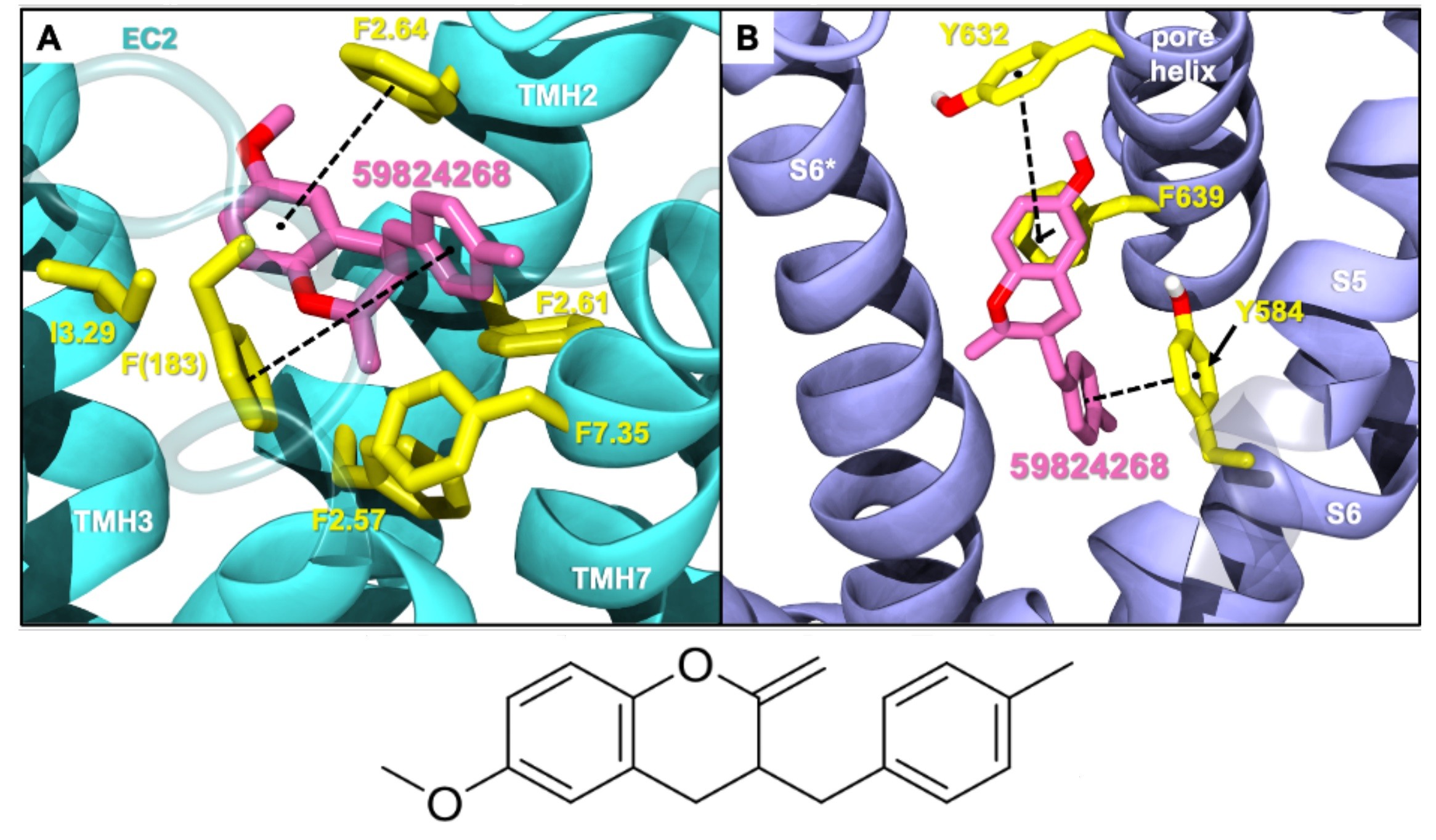
The canonical cannabinoid receptor 2 (CB2), which avoids the psychoactive effects of CB1, and the capsaicin receptor (TRPV1), are involved in noxious stimuli response, and both are implicated in pain and inflammatory processes. The goal of this research project is to develop novel dual modulators of these two receptors, aiming to reduce pain and inflammation without off-target effects, ideally limiting the number of side effects, and treating pain in an opioid-sparing manner. Starting points for this project include chromene scaffolds based on a synthetic cannabinoid ligand, JWH133, a CB2-specific agonist. Novel compounds will be computationally designed from the chromene scaffolds and synthesized for use in biological assays. Further compounds will be identified utilizing feature similarity or cross-receptor approaches focusing on scaffold diversity
Development of Novel Fatty Acid-derived Mediators
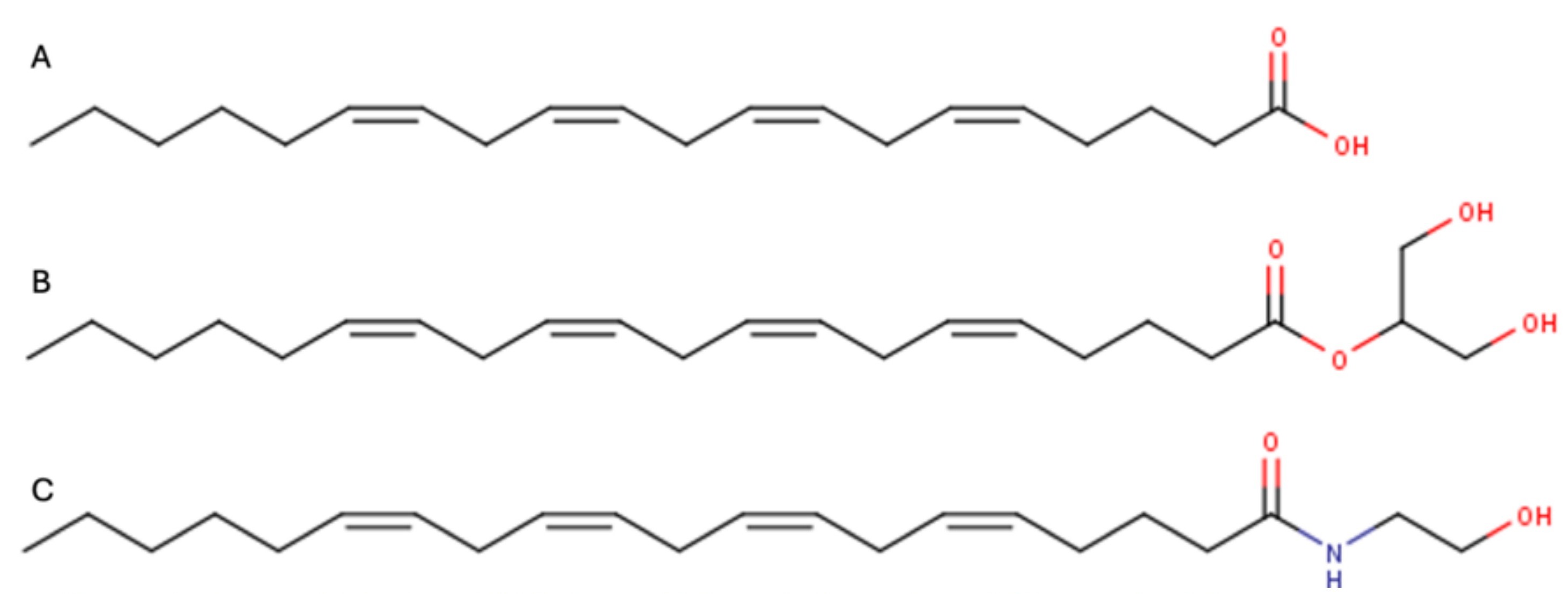
Fatty acids are prevalent in the body, forming cell membranes and being metabolized into endogenous mediators of receptors, such as the endogenous cannabinoid ligands 2-arachidonoyl glycerol and anandamide stemming from arachidonic acid. Fatty acid introduction through diet changes the composition of the types of free- or membrane-incorporated fatty acids present thus modifying levels of endogenous metabolites produced that may have widespread effects via modulation of eCBome receptors in pro- or anti-inflammatory manners. Since two major classes of eCBome receptors (G protein-coupled receptors, e.g., CB2, and transient receptor potential ion channels, Figure 1: Docking of a chromene analogue (PubChem ID: 59824268; pink) identified from a feature similarity search in CB2 (left) and TRPV1 (right) with interacting residues relevant to binding and activation shown in yellow. e.g., TRPV1) are both membrane-bound, fatty acid mediators have a higher likelihood of entering into the receptor to exert its effects (if any). Poly-unsaturated fatty acids will be used as a starting point where modifications such as changes in the head group, incorporation of structural rigidity and/or aromatic moieties, or points of oxygenation will be designed, docked, synthesized, and studied. Receptor focuses for this project are primarily CB1, CB2 and TRPV1.
Functional Model Development for Use in MD Simulations, Modeling and Docking
With the rise of cryo-EM and its ability to resolve structures of membrane-bound receptors, the ability to use these structures in computational chemistry without developing a homology model from complete scratch has saved significant time and effort by largely bypassing stabilizing modifications that change the structure of the target receptor (e.g., crystal packing, thermostabilizing mutations, nanobodies, or fusion partners). The development of other eCBome receptor models will start from their cryo-EM resolved structure (if available) or closest homologous cryo-EM-resolved relative, applying the necessary changes ensuring the model follows the human sequence instead of rat, mouse, etc. and confirming structural stability of generated models for use in MD, modeling, and docking. As these models are developed, they will be used to expand the scope of the Development of Novel Fatty Acid-derived Mediators project.
Selected Publications
Roussel, C.; Lessard-Lord, J.; Nallabelli, N.; Muller, C.; Flamand, N.; Silvestri, C.; Di Marzo, V. * "Human gut microbes convert an EPA- and DHA-rich oil into the corresponding oxylipins, but not N-acyl-ethanolamines." The Faseb Journal 2025. DOI: 10.1096/fj.202500752RR
Mboumba Bouassa, R.S. #; Giorgini, G. #; Silvestri, C.; Muller, C.; Nallabelli, N.; Alexandrova, Y.; Durand, M.; Tremblay, C.; El-Far, M.; Chartrand-Lefebvre, C.; Messier-Peet, M.; Margolese, S.; Flamand, N.; Costiniuk, C. T.; Di Marzo, V.; Jenabian, M-A. * "Plasma endocannabinoidome and fecal microbiota interplay in people with HIV and subclinical coronary artery disease: results of the Canadian HIV and Aging Cohort Study." iScience 2024. DOI: 10.1016/j.isci.2024.110456
Muller, C.; Morales, P.; Reggio, P. H. * "Cannabinoid Ligands Targeting TRP Channels." Frontiers in Molecular Neuroscience 201 9. DOI: 10.3389/fnmol.2018.00487
Muller, C.; Reggio, P. H. * "An analysis of the putative CBD binding site in the ionotropic cannabinoid receptors." Frontiers in Cellular Neuroscience 2020. DOI: 10.3389/fncel.2020.615811
Morales, P. *# and Muller, C. *#; Jagerovic, N.; Reggio, P. H. " In silico identification of CB2 – TRPV1 dual modulators with potential neuroprotective properties." Frontiers in Molecular Biosciences 2022. DOI: 10.3389/fmolb.2022.841190
Muller, C. * ; Lynch, D. L.; Hurst, D. P.; Reggio, P. H. "TRPV1 activation by anandamide via a unique lipid pathway." Journal of Chemical Information and Modeling 2021. DOI: 10.1021/acs.jcim.1c00893

Chanté Muller
Assistant Professor
Faraday Hall 305
cmuller1@niu.edu
Education
Ph.D. – Medicinal Biochemistry, University of North Carolina at Greensboro, 2022
Google Scholar
Areas of Specialization
Medicinal chemistry, synthesis, computational chemistry, endocannabinoidome
Research Interests
Endocannabinoidome, TRP channels, CB1/CB2, lipid-based mediators, dual modulators
Frequently Taught Classes
- CHEM 336- Organic Chemistry I
- CHEM 337 - Organic Chemistry II
- CHEM 435/635 - Spectroscopic Identification of Organic Molecules
