
Center for Latino and Latin American Studies
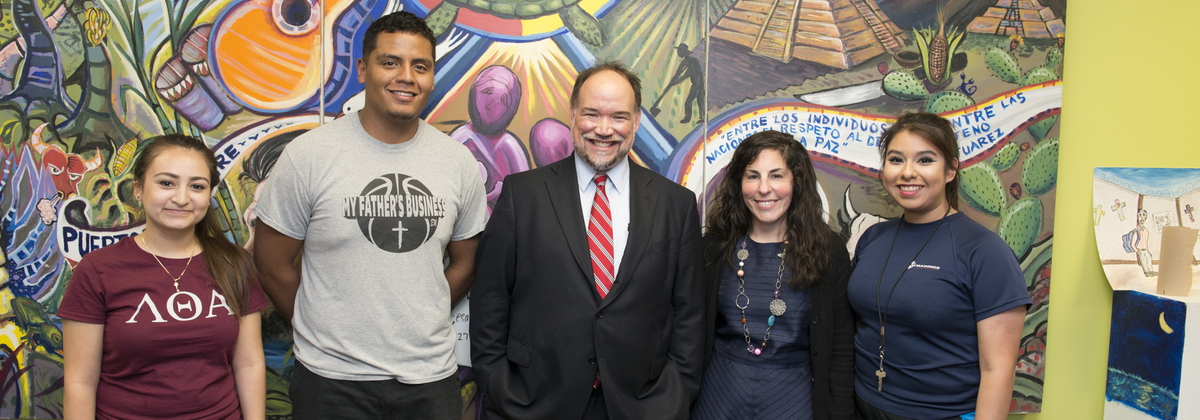
We serve as a home for the interdisciplinary study of the Latino experience in the United States as well as Latin America and the Caribbean. Our curricular offerings in the humanities, arts and social sciences are enhanced by our academic and cultural programming and community outreach activities.
We offer a minor in Latino and Latin American Studies as well as an undergraduate certificate. These credentials feature classes and research led by NIU faculty from several different colleges and provides detailed knowledge of the Latino experience in the United States as well as Latin American civilization, which enriches the general educational experience of students and offers several practical applications. Future educators gain knowledge of the cultural heritage of their Latino students.
Our minor also provides other future professionals with the knowledge to maximize their job performance in regions with Latino populations. Latino students enrolled in the minor also acquire a broader understanding of their history and culture.
Spring Office Hours
| Day | Time | Location |
|---|---|---|
| Monday | 8 a.m. - 4:30 p.m. | In person |
| Tuesday | 8 a.m. - 4:30 p.m. | In person |
| Wednesday | 8 a.m. - 4:30 p.m. | In person |
| Thursday | 8 a.m. - 4:30 p.m. | In person |
| Friday | 8 a.m. - 4:30 p.m. | In person |
If you would like to set up an advising appointment, please contact djackson15@niu.edu. For all other inquiries, please contact Dr. Christina Abreu at cabreu@niu.edu. We are looking forward to hearing from you!
Upcoming Events
Contact Us
Center for Latino and Latin American StudiesNorthern Illinois University
515 Garden Rd.
DeKalb, IL 60115
815-753-1531
latinostudies@niu.edu
